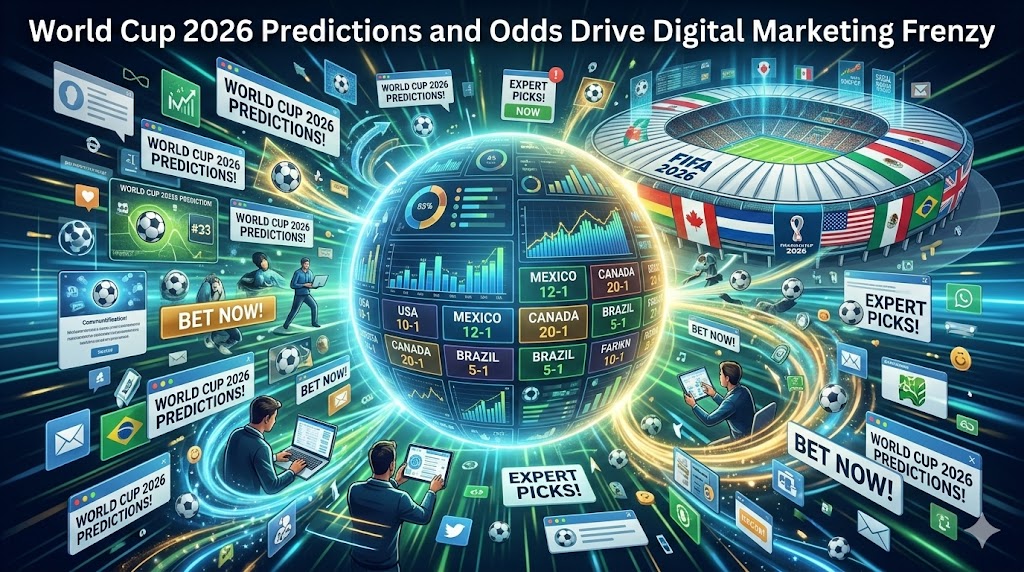
The 2026 FIFA World Cup isn’t just reshaping football — it’s redefining how brands, fans, and content platforms engage with the sport and each other. As odds and group world cup 2026 predictions and odds circulate following the draw of 48 teams, marketers are racing to tie those storylines into digital campaigns that captivate millions worldwide. The mash‑up of predictions and marketing isn’t accidental; it’s central to how football buzz gets amplified across social and digital channels in the lead‑up to next summer’s global spectacle.
One of the most talked‑about moves in the space is the landmark partnership naming TikTok as the “preferred platform” for the World Cup, giving the short‑form video giant unprecedented access to behind‑the‑scenes training clips, press conferences, and creator interactions. This kind of access isn’t just promotional — it shapes fan expectations and even betting sentiment as teams and players trend across timelines.
As global odds providers start publishing early predictions — with statistical models and supercomputers suggesting favourites like Spain and France — these projections are turning into dynamic content hooks for social feeds and branded campaigns. Enthusiasts are consuming match projections, upset probabilities, and individual match odds almost daily, and digital advertisers are weaving that data into storytelling loops that build anticipation rather than just sell tickets.
The convergence of player narrative and marketing is part of what makes this World Cup unique. Icons like Lionel Messi, Kylian Mbappé and emerging stars are not just athletes — they’re narrative anchors for worldwide digital campaigns. Their performances influence odds, and those odds in turn become fodder for social clips, prediction sliders, influencer duels, and even fan‑generated polls. Marketers are using these trends to increase engagement around everything from group stage forecasts to knockout stage drama.
But even as passion grows, there’s an undertone of complexity. News about geopolitical tensions near host cities and shifting global travel patterns has added layers to the narrative, affecting how fans interpret odds and next‑match predictions. Digital platforms are capitalising on this by incorporating real‑time updates — from postponement alerts to shifting fan sentiment — into campaigns and feeds that move as fast as the football itself.
In this era where the World Cup blends sport, culture, and digital momentum, understanding the flow of predictions and odds isn’t just about wagering — it’s about how brands, influencers, platforms, and fans tell the tournament’s story long before the final whistle blows.